18th BRICS+ in New Delhi and the Rise of the Global South: Africa’s Voice in the Emerging Multipolar World

18th BRICS+ in New Delhi and the Rise of the Global South: Africa’s Voice in the Emerging Multipolar World

Share the Joy:

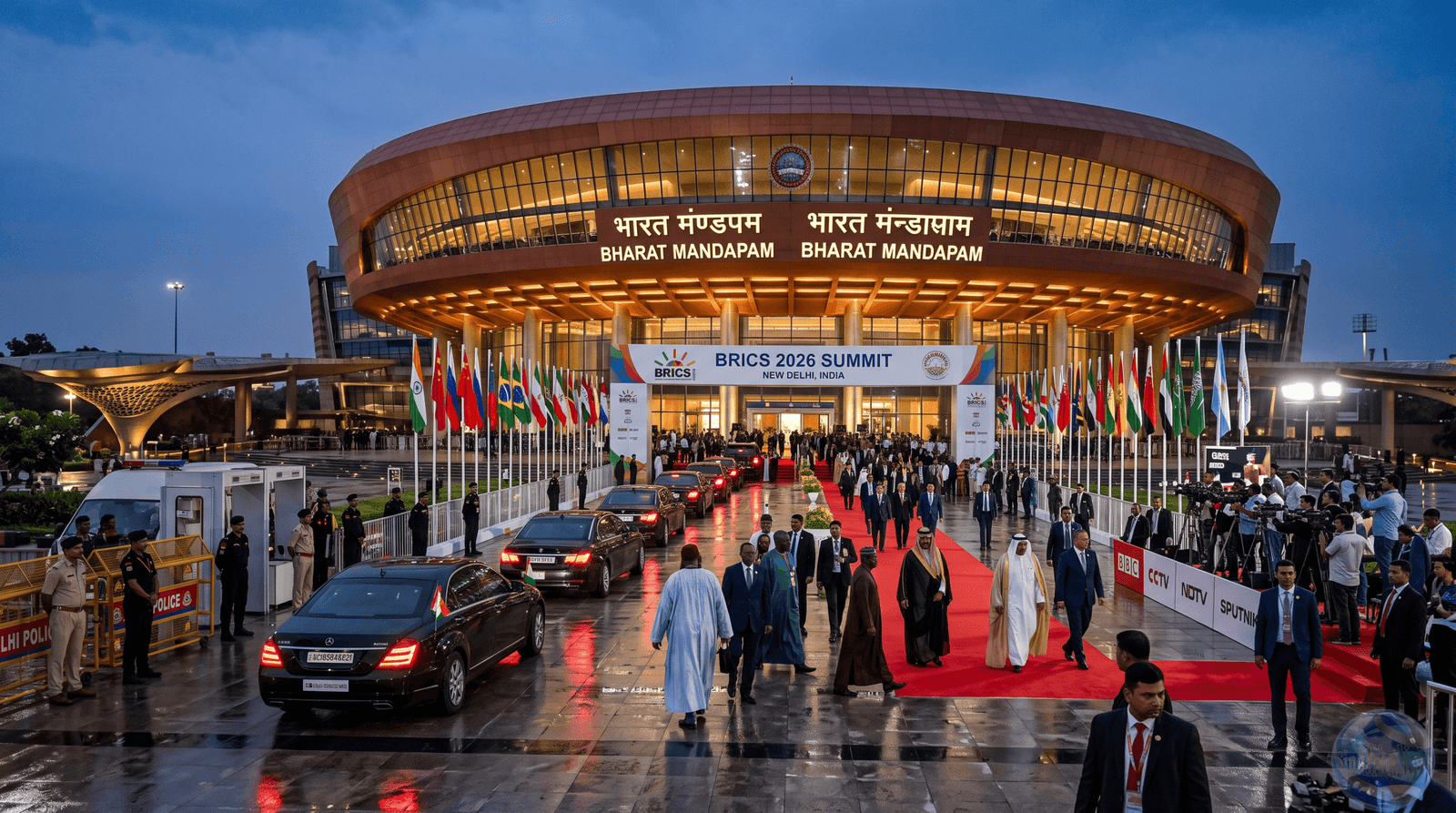
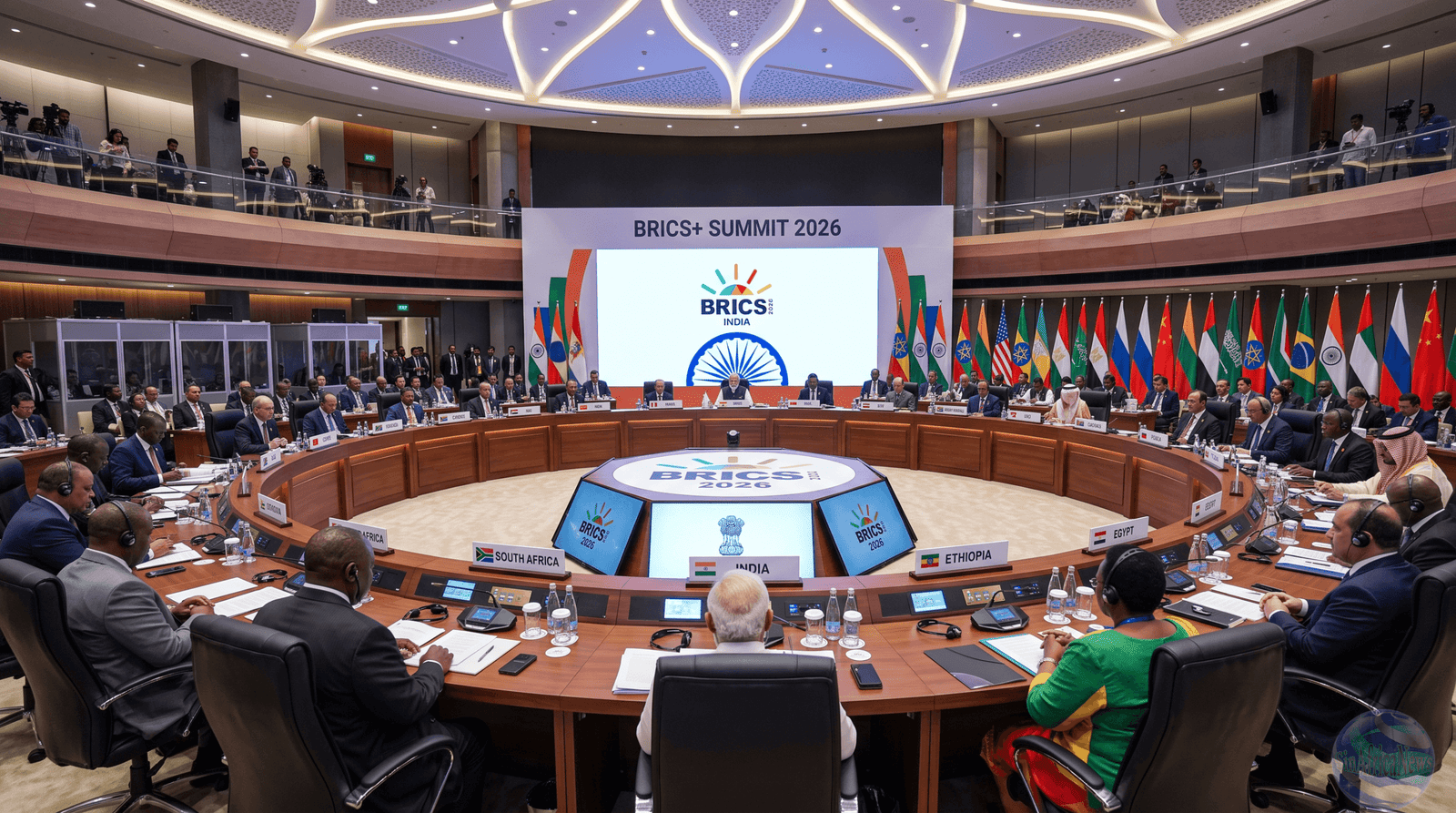
The 18th BRICS Summit in New Delhi, held on 12–13 September 2026 under the theme “Building for Resilience, Innovation, Cooperation and Sustainability,” marks yet another decisive step in the political maturation of the Global South. From my standpoint as an African scholar observing the changing architecture of world politics, this summit was not merely a diplomatic gathering. It was a strong affirmation that the international system is no longer the exclusive preserve of old powers. The Global South is organizing itself with greater confidence, greater strategic clarity, and a growing determination to shape the norms, institutions, and priorities of the twenty-first century.
What is especially significant about the New Delhi summit is that it took place at a moment when the world is visibly transitioning from a unipolar order toward a more dispersed and negotiated multipolarity. The unanimous adoption of the New Delhi Declaration, with its extensive agenda on global governance reform, finance, trade, technology, health, agriculture, and development cooperation, reflects the seriousness with which BRICS now approaches the restructuring of the global order. This is no longer a symbolic club of emerging economies. It is increasingly becoming a platform through which the developing world seeks to articulate practical alternatives to inherited systems of exclusion.
For Africa, the summit carries a deeper meaning. It reveals that the continent is no longer speaking from the margins of global affairs. It is speaking from within the room, from within the negotiating table, and increasingly from within the institutions that may define the future. The presence of South Africa, Egypt, and Ethiopia as BRICS members is therefore not incidental. These countries are not merely participants; they are case studies in the rise of African diplomatic agency in a changing world.
South Africa remains the most established African voice within BRICS. Its role at the New Delhi summit once again underscored its long-standing capacity to link African priorities to broader Global South agendas. President Cyril Ramaphosa’s participation in the summit signaled continuity in South Africa’s strategic vision: the belief that multilateral reform, fairer economic governance, and South-South solidarity are not abstract ideals, but necessary foundations for a more just international order. South Africa’s presence matters because it demonstrates that Africa is not only demanding inclusion; it is contributing ideas, negotiating outcomes, and shaping the language of global cooperation.
Yet the new Africa within BRICS is larger than South Africa alone. Egypt’s participation adds another crucial dimension. As both an African and Arab power, and as a nation strategically positioned between Africa, the Mediterranean, and the Middle East, Egypt embodies the geopolitical bridges that increasingly define the Global South. President Abdel Fattah el-Sisi’s attendance in New Delhi highlighted Egypt’s determination to consolidate its place within emerging non-Western frameworks of finance, infrastructure, and political coordination. Egypt’s role within BRICS illustrates how African states are diversifying their diplomatic options and refusing to be confined by older dependency structures. In a multipolar world, this flexibility is power.
Ethiopia offers perhaps one of the most compelling examples of Africa’s rising voice in the new global equation. Long seen historically as a symbol of African sovereignty and anti-colonial dignity, Ethiopia now occupies an increasingly consequential place in contemporary South-South diplomacy. Prime Minister Abiy Ahmed’s participation and high-level engagements on the sidelines of the summit demonstrate that Ethiopia is not simply entering new forums; it is positioning itself within the strategic debates that will shape development, monetary cooperation, food security, and institutional reform. Ethiopia’s presence at BRICS is particularly meaningful because it shows that Africa’s diplomatic renewal is not confined to traditional regional heavyweights. It is expanding.
Taken together, South Africa, Egypt, and Ethiopia represent three distinct but complementary expressions of African agency. South Africa brings institutional experience and a long tradition of multilateral activism. Egypt brings geostrategic reach and cross-regional leverage. Ethiopia brings historical symbolism, demographic weight, and renewed diplomatic ambition. Their simultaneous presence within BRICS is therefore more than a matter of membership. It is evidence that Africa is no longer entering global platforms one voice at a time. It is emerging through multiple centers of influence.
This is why the rise of BRICS+ must be understood as inseparable from the rise of the Global South itself. The enlargement of the grouping and the broadening of its agenda reflect an ongoing shift in world politics: countries of Asia, Africa, Latin America, and the Middle East are no longer content to simply react to crises defined elsewhere. They are building frameworks through which their own development priorities, security concerns, and civilizational perspectives can gain institutional expression. In this respect, BRICS is becoming one of the laboratories of the post-Western world.
For Africa, this transformation creates historic opportunities, but it also imposes responsibilities. Presence alone is not enough. African countries within BRICS must work to ensure that their membership translates into tangible gains for the continent: better access to development finance, more equitable trade terms, support for industrialization, technological transfer, food sovereignty, and stronger representation in global decision-making bodies. They must also ensure that Africa speaks not only through national interests, but through a continental consciousness aligned with the aspirations of Agenda 2063 and the broader hopes of African peoples.
The deeper lesson of New Delhi is that Africa’s voice is becoming harder to ignore because it is increasingly anchored in alliances, institutions, and strategic partnerships that reflect the realities of our time. The old hierarchy of world politics is under pressure. A more plural order is emerging, unevenly but unmistakably. In that order, African countries are not destined to be passive spectators. They are becoming authors of the script.
As we reflect on the New Delhi summit, we are convinced that the true significance of BRICS+ lies not simply in its expansion, nor even in the declarations it produces, important as those are. Its greater significance lies in the political imagination it legitimizes: the idea that the world can be governed differently, that development can be pursued through more balanced partnerships, and that the nations of the Global South can move from the periphery of international affairs to its strategic center.
Africa’s place in that future is neither symbolic nor secondary. It is central. And the presence of South Africa, Egypt, and Ethiopia at BRICS+ in New Delhi is a powerful reminder that the African voice in the emerging multipolar world is not rising tomorrow. It is rising now.
Share the Joy:

THE BEST STORIES INBOX!

Join our global community of readers who seek to understand the evolving dynamics between China & Africa. Let's see the world from the Global South's perspective.

NEWS-LETTER

Sign up to receive awesome contents inbox.

We don’t spam! Read our privacy policy .

SinAfricaNews: A Sino-African Narrative of the world !

September 15, 2026 6:23 am,Tuesday (GMT+1)

You must LOG IN first!