An African scholar offers Chinese readers a reading of Africa’s “martial soul”

Share the Joy:

Author: Dr. TALING T. RODRIGUE, Cameroon. Director of the Centre for African Film and TV Studies. Deputy director of the Centre for Francophone African Studies at Zhejiang Normal University, China. Founder of the China-Cameroon Cultural Centre.

I- The essentials

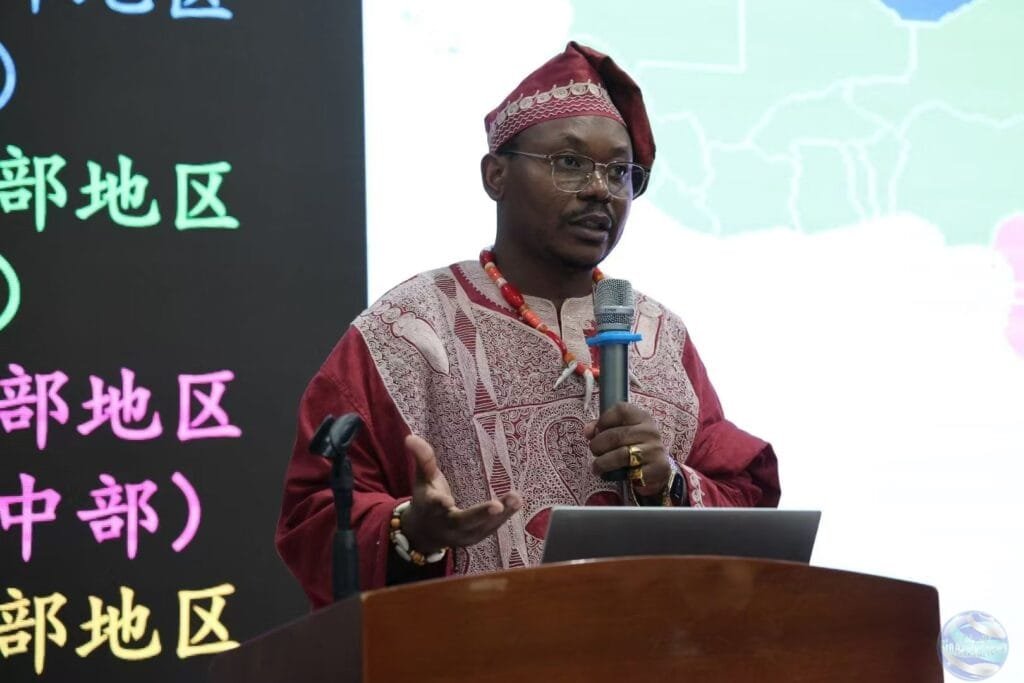
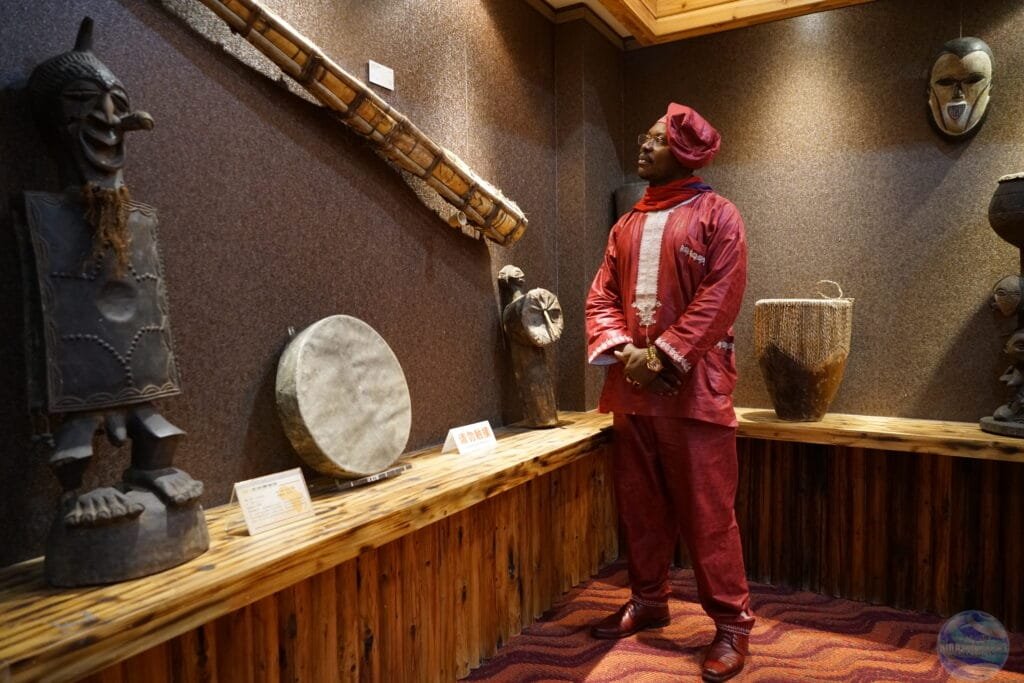
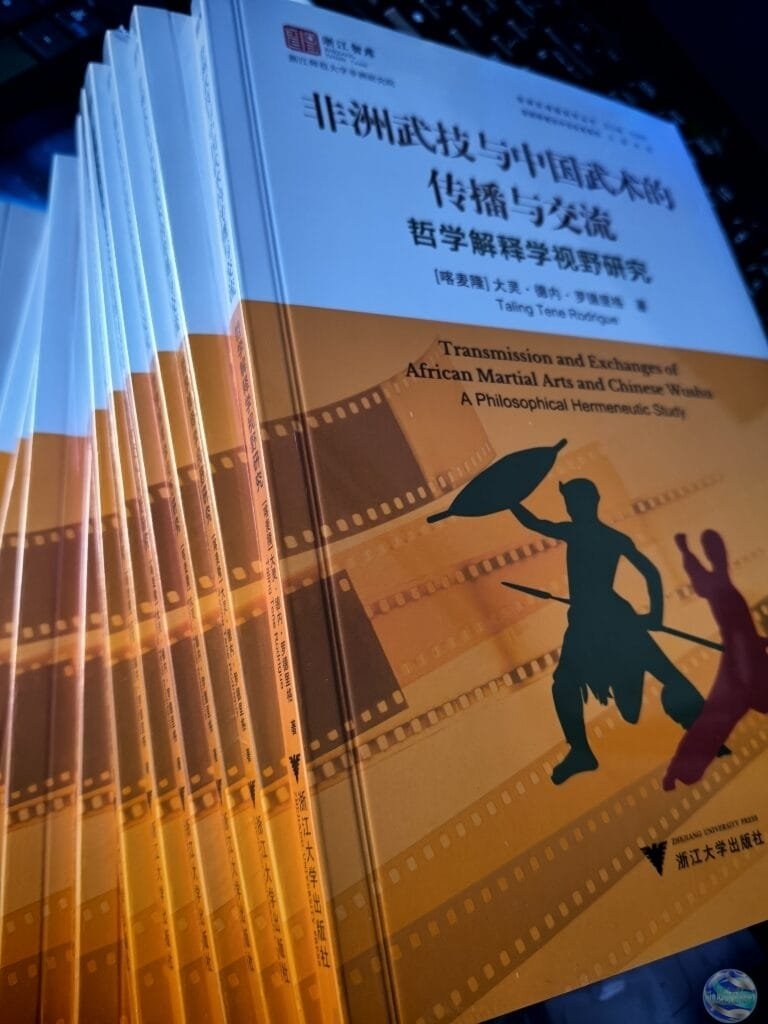
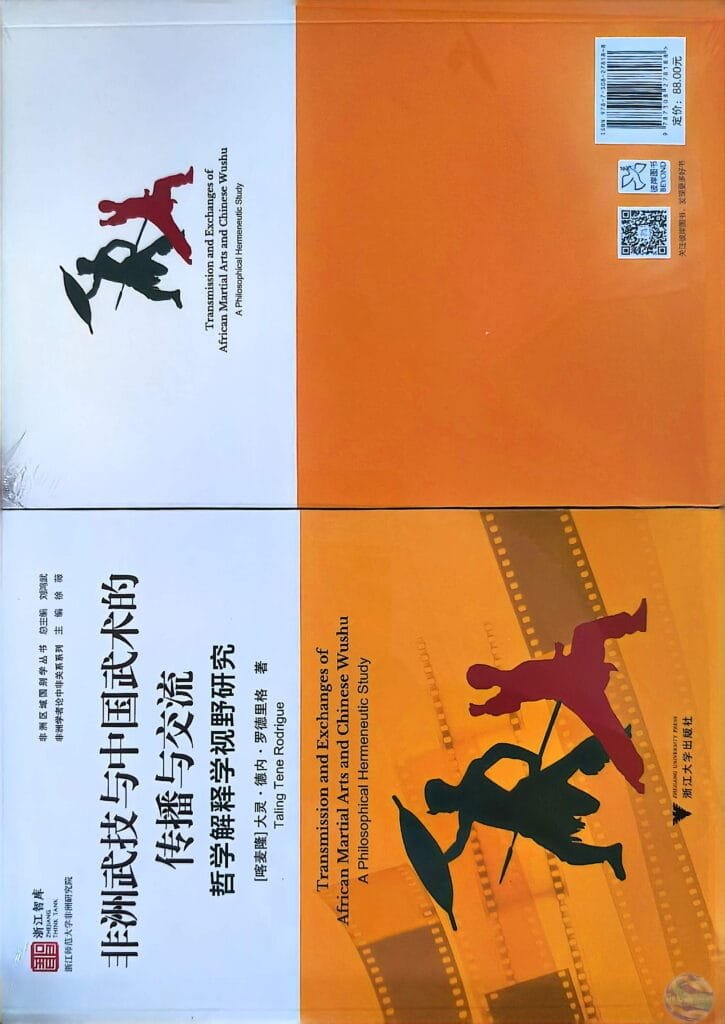
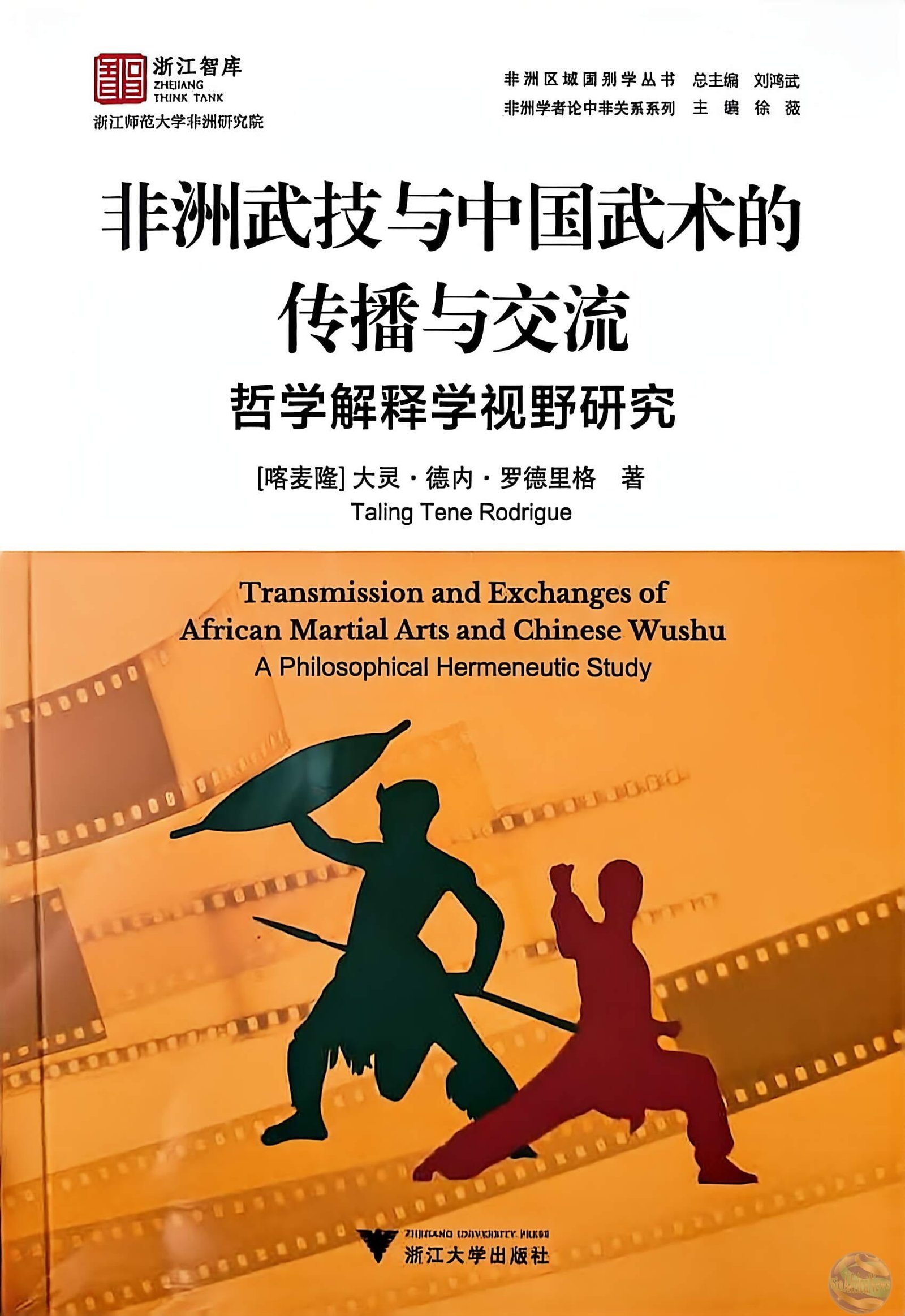
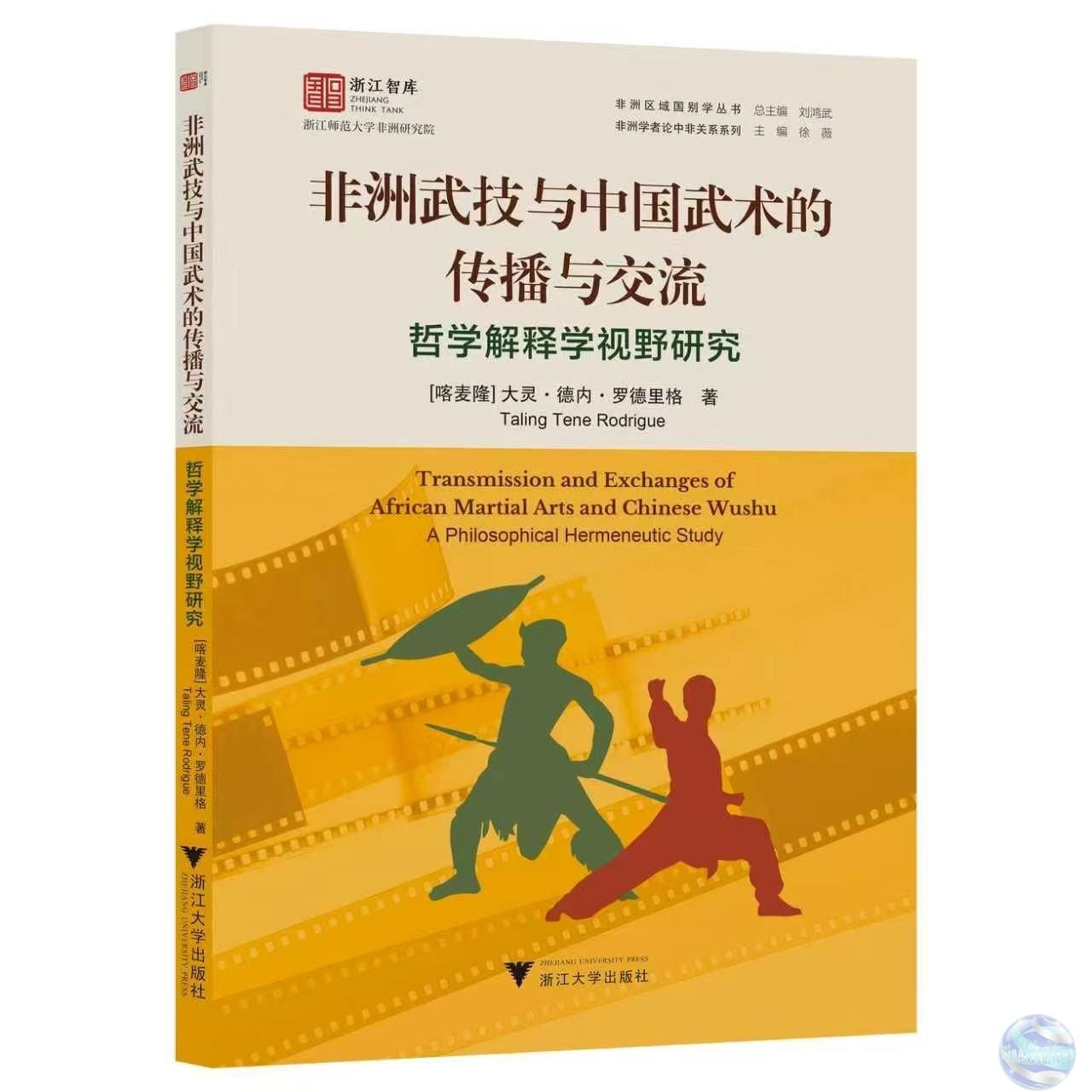
An African scholar has written a book in Chinese to tell Chinese readers about Africa. And he began with kung fu. Zhejiang University Press has published Transmission and Exchanges of African Martial Arts and Chinese Wushu: A Philosophical Hermeneutic Study, by the Cameroonian scholar TALING TENE RODRIGUE, known as LuoGe. Director of the Centre for African Film and TV Studies at the Institute of African Studies of Zhejiang Normal University and founder of the China-Cameroon Cultural Centre, the author brings African martial arts and Chinese wushu (understood in the book as Chinese martial arts, encompassing all existing styles) to the same table for the first time, as equals.
It is the first book published in China in which an African scholar writes directly in Chinese to compare the two great martial cultures and trace their crossed exchanges. The book does not ask “who taught whom”. It asks: how do we see one another?

II- One book, three ambitions

The work is an interdisciplinary monograph spanning traditional ethnic sports, African studies, communication studies, film studies and philosophical hermeneutics. Its theoretical frame comes from the German philosopher Hans-Georg Gadamer. The guiding thread — pre-understanding, new understanding, fusion of horizons — serves to retell a story long misread: how Chinese wushu came to Africa, and how African martial arts came back into the conversation.
Three lines of force sum up the project:
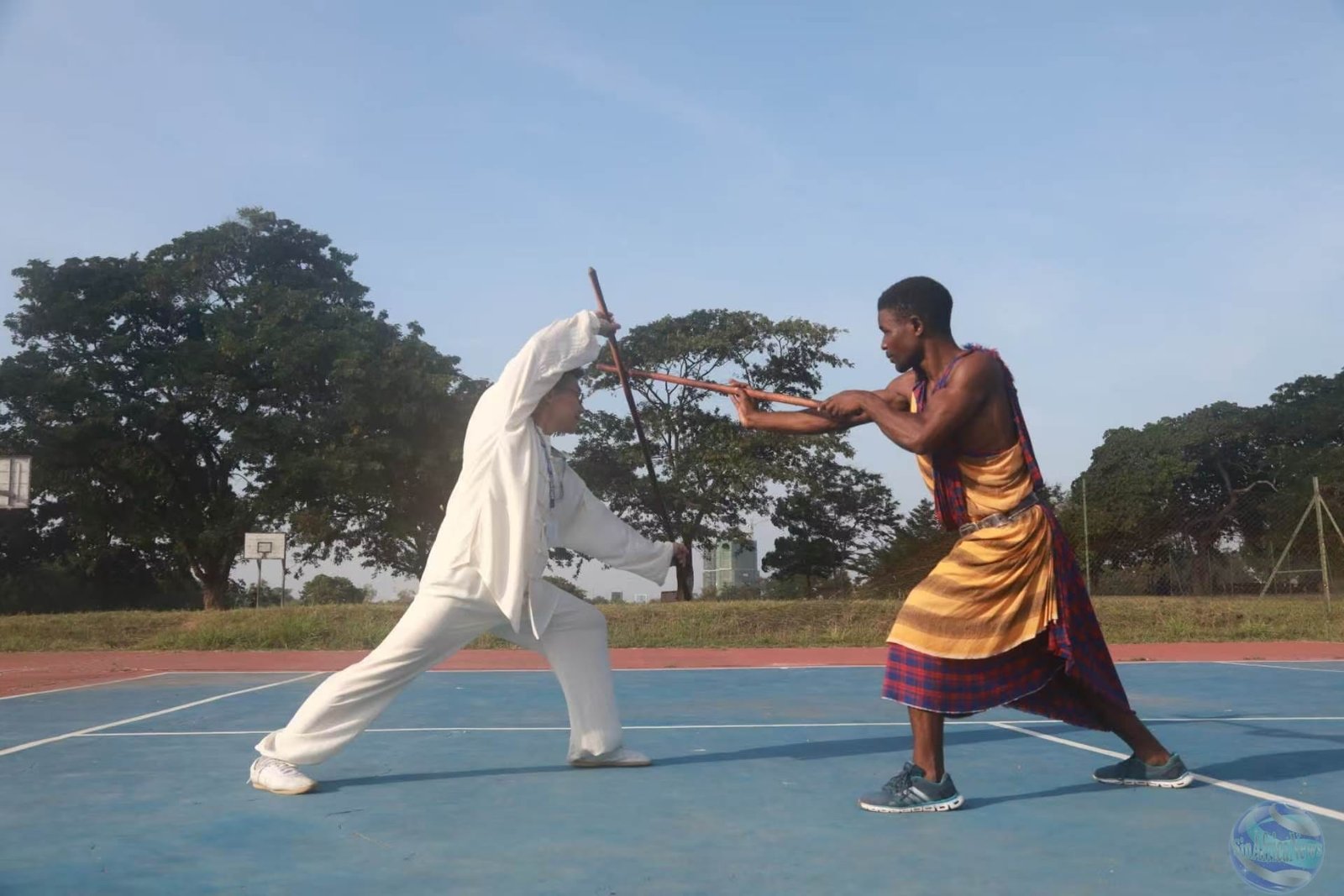
  • A two-way history. Chinese wushu was not simply “imported” into Africa: two cultures of the body met there, misread each other, rewrote and reinvented each other.
  • A comparison between equals. African martial arts are no longer “raw material” for observation, but a civilisation with its own philosophy and its own right of interpretation.
  • A practical guide to cooperation. The book delivers concrete tools for audiovisual co-production, sports cooperation and cultural diplomacy between China and Africa.
The volume comprises an introduction, eight chapters and an afterword, an index of illustrations, numerous field photographs and diagrams. Three prefaces situate it from the standpoints of African studies in China, traditional ethnic sports and film studies. Its theoretical core comes from the doctoral thesis the author defended at Shanghai University of Sport, “A Study of the Transmission and Memory of Chinese Wushu in Africa from a Hermeneutic Perspective”. The book expands it considerably: a new in-depth study of African martial arts, unpublished field material and film case studies.

III. What the book says

  1. African martial arts: combat, spirituality, dance
    The central thesis comes down to three words: “武 wu, 巫 wu, 舞 wu” — combat, spirituality, dance. In other words hand-to-hand fighting techniques, the fighter’s spiritual rituals and the artistic dimension of his mastery are inseparable. The author first traces the genealogy of the very notion of “African martial arts”. He then takes each of the three terms apart and illustrates it with specific styles and rituals. Two passages stand out: the relationship of these practices to the animal world, and their close link with initiation rites, those coming-of-age ceremonies still found today in traditional African societies.
    1. Chinese wushu: the force behind the gestures
    In counterpoint, the author starts from the Chinese character “wu” (武) to bring out four features of wushu: striking and fighting (“击/打”), performing and dancing (“演/舞”), Chinese martial ethics (“武德”) and health cultivation (“养生”). He then traces five lineages: yin and yang, Taoism, Confucianism and Buddhism. His conclusion: the power of wushu (understood in the book as Chinese martial arts, encompassing all existing styles) does not lie in techniques, but in the system of values that carries it. Not “how to strike”, but “why”.
    1. Wushu as a link between China and Africa
    Wushu is “a language of the body”, the author writes, and as such a formidable tool for dialogue. Hence his formula: the “martial responsibility of the China-Africa community with a shared future”. Taking wushu beyond its borders is first of all a matter of “knowledge for oneself”; bringing it into Africa requires adapting to local ways. The book also confronts, rarely for a work of this kind, the fragilities of African martial arts: ruptures in the continent’s history, controversies over the legacy of ancient Egypt, the scarcity of ancient scripts and classical texts, and the near-absence of research on the subject.
    1. A new method: object, vehicle, subject and two memories
    This is the most original part of the book. In China, in Africa and elsewhere alike, the author notes, work on the international spread of wushu ignores the hermeneutic perspective. He therefore redefines the “object”, the “vehicle” and the “subject” of that transmission, examines how they pass from one language to another, and proposes a pair of concepts: “visual memory” and “bodily memory”. These, he argues, are the two paths by which wushu (understood in the book as Chinese martial arts, encompassing all existing styles) takes root in Africa.
    1. The screen arrived first
    The book retraces China-Africa audiovisual exchanges before the 1970s, then the three ages of kung fu films on the continent: Bruce Lee for the early years, Jackie Chan and Jet Li for the middle period, Donnie Yen for the most recent. More surprising still: each star shaped a different “Chinese kung fu” in the African imagination. Bruce Lee defined the very word “Kung Fu”; Jackie Chan invented comic kung fu; Jet Li, mythological kung fu; Donnie Yen, kung fu of virtue.
    1. From the cinema seat to the screen: three generations of dreamers
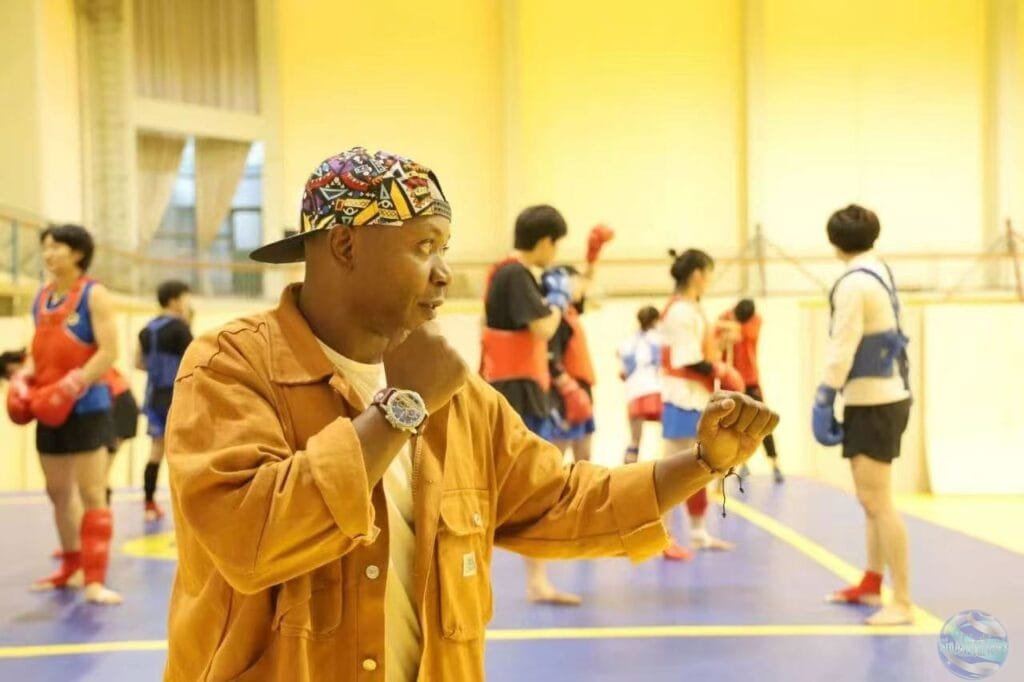
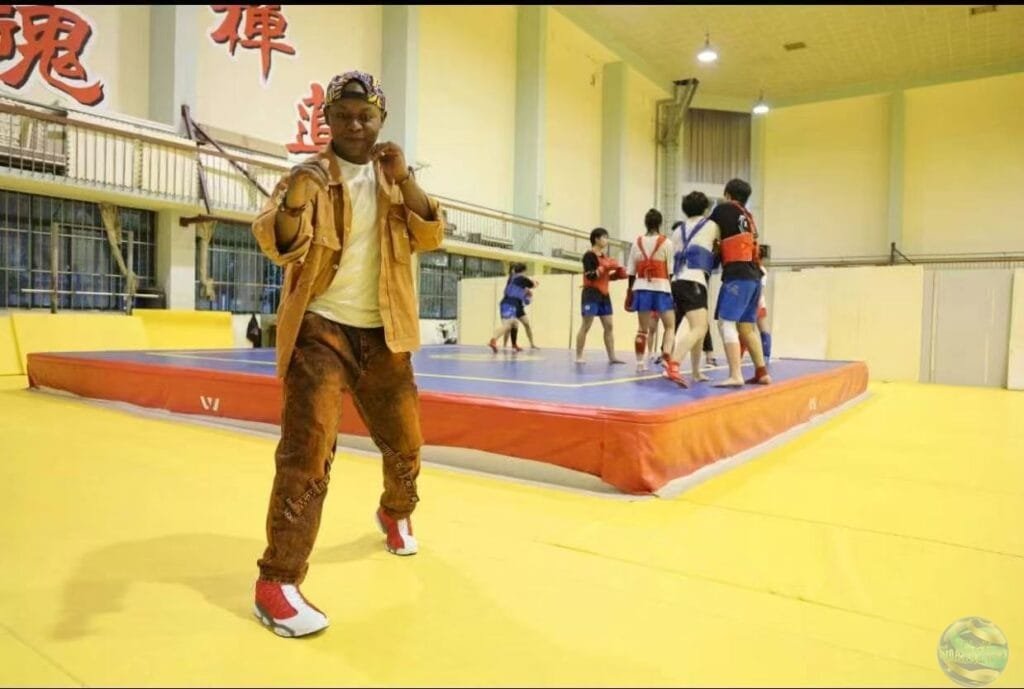
    Three real lives carry the genealogy of the African “kung fu dream”: the film star Luc Bendza; the first African Shaolin monk, “Shi Yanmai” (real name Dominique Saatenang), nicknamed the “African Bruce Lee”; and the author himself, the first African to hold a doctorate in Chinese martial arts. This is the most embodied chapter of the book. Transmission is no longer an abstract curve, but bodies and lives.
    1. The reversal: understanding wushu with an African body
    The seventh chapter turns the perspective around. The author compares the experience of practitioners with no local martial background and that of practitioners who have one. The latter spontaneously grasp Chinese qigong through African “spirituality”, striking through African “wrestling”, and forms (taolu) through African “dance”. African martial arts thus become the prior knowledge that allows Africans to understand Chinese wushu.
    1. From theory to the film set
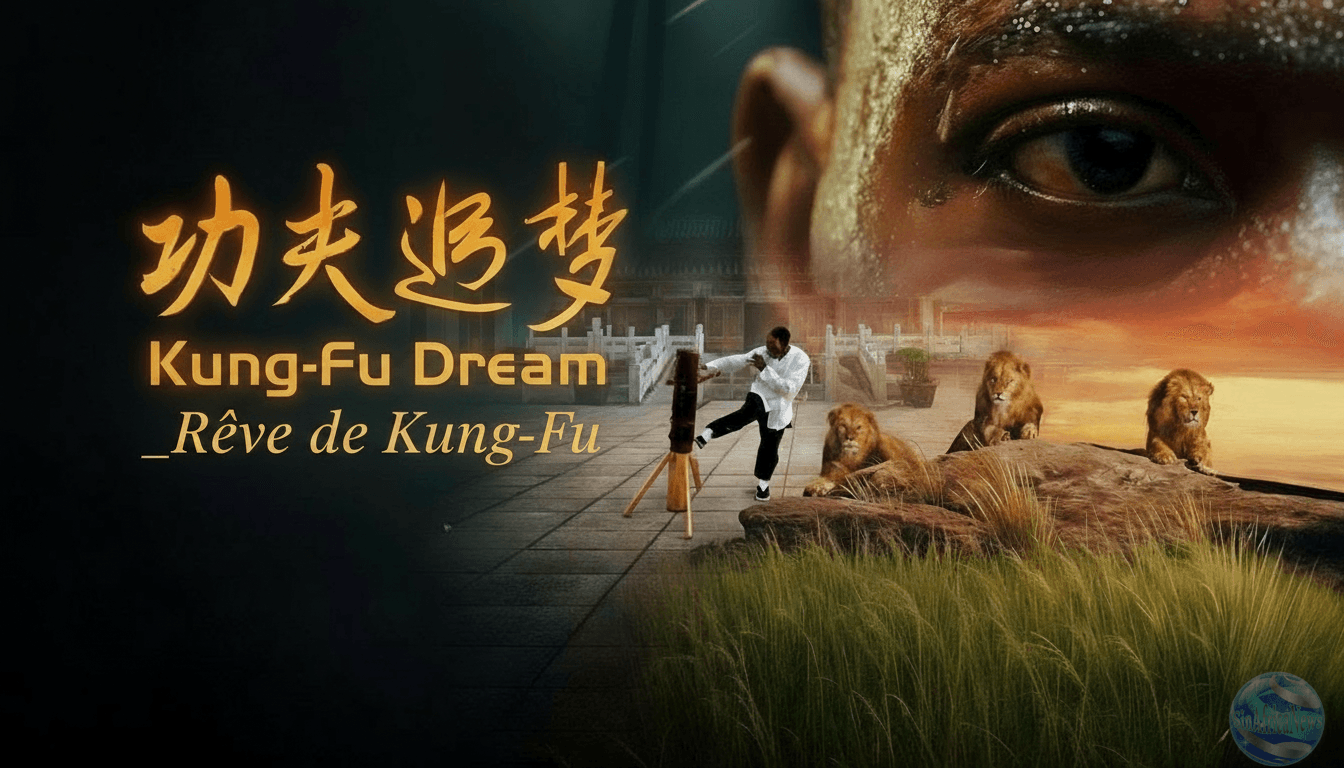
    The book leads to concrete proposals. Within the framework of the Belt and Road Initiative and the China-Africa community with a shared future, the author puts forward the project of “Sino-African Kungfu Movies” and that of the China-Cameroon Cultural Centre. From these he draws three principles: intercultural communication is a “circle of interpretation”; localisation is the condition of internationalisation; “pass on to others the knowledge they desire, not what you would not want yourself”. Both projects already exist: the first produced the China-Africa co-produced documentary Kung Fu Dream (《功夫追梦》), of which the author is chief director, screenwriter for the African side and lead actor; the second is today the China-Cameroon Cultural Centre, which he founded.

IV- The author

TALING T. RODRIGUE, Luo Ge by his Chinese name, was born in Bafoussam, in western Cameroon. He is a researcher at the Institute of African Studies of Zhejiang Normal University, where he directs the Centre for African Film and TV Studies. He is also deputy director of the  Centre for Francophone African Studies at Zhejiang Normal University China, and founder of the China-Cameroon Cultural Centre.
His own path already reads like a story of China-Africa exchange. As a child, he never missed a film by Bruce Lee, Jet Li or Jackie Chan. As a teenager, he learned Chinese at the Confucius Institute of the University of Yaoundé II. He went on to earn a master’s degree in international Chinese language teaching and culture at Zhejiang Normal University, then a doctorate in traditional ethnic sports at Shanghai University of Sport, with a thesis devoted to the spread of martial arts cinema in Africa. He is the first African scholar to compare the martial arts of the two continents systematically from a historical and philosophical perspective.
He has published more than thirty articles: in China, in leading journals such as Contemporary Cinema (《当代电影》) and Sport Science Research (《体育科研》); internationally, in the Journal of African and Asian Studies, the Journal of Sino-African Studies, the Journal of Education and Practice and IJRISS, among others. Among his most cited texts: “Fusion and Decomposition of ‘Combat, Spirituality and Dance’” (Sport Science Research, no. 5, 2016) and “From Bruce Lee to Donnie Yen: Chinese Kung Fu in the Eyes of African Film Fans” (Contemporary Cinema, no. 10, 2019).
In front of the camera, he starred in the martial arts film Soul of Wrestling (《踋魂》) and appears in several documentaries, including Forty Foreigners Look at China’s Reform and Opening-up (Guangdong Radio and Television) and Letter from China (CCTV). He is currently chief director, screenwriter for the African side and lead actor of the co-produced documentary Kung Fu Dream (《功夫追梦》), which obtained the “Dragon Seal” distribution licence from China’s National Film Administration in 2026.

V. A book and its publisher

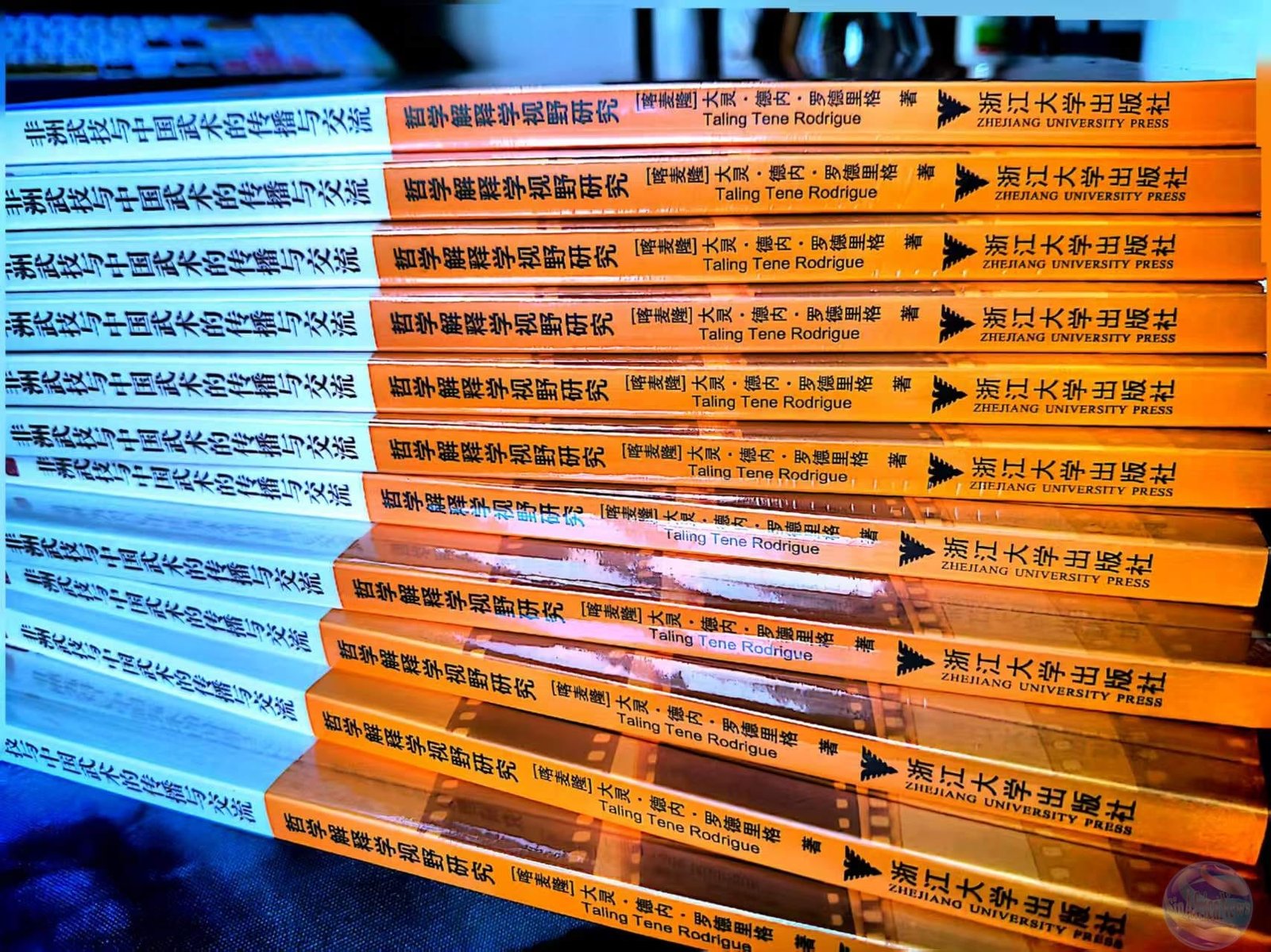
Founded in May 1984, Zhejiang University Press is a first-tier national publishing house under the supervision of China’s Ministry of Education. It has completed more than 700 national-level projects and published over twenty thousand titles, and it sits on the working group of the “Chinese Book International Promotion Plan”. For several years it has worked with the Institute of African Studies of Zhejiang Normal University: their joint series, “The China-Africa Community with a Shared Future in the New Era”, is supported by the Zhejiang Cultural and Artistic Development Fund. This book extends that collaboration and gives a solid platform, in Chinese, to African scholars writing on China-Africa relations.
For Chinese readers, the route is unusual: start from wushu, what they know best, to discover a real, complex Africa with genuine philosophical depth. For China-Africa exchanges, the book offers a method that can be used immediately. Understanding, the author reminds us, is never about handing the other your own answer: it is about bringing two gazes closer together before the same question.
(End of press release | Interview requests and press services: Centre for African Film and Audiovisual Studies, Institute of African Studies, Zhejiang Normal University)

Share the Joy:

THE BEST STORIES INBOX!

Join our global community of readers who seek to understand the evolving dynamics between China & Africa. Let's see the world from the Global South's perspective.

NEWS-LETTER

Sign up to receive awesome contents inbox.

We don’t spam! Read our privacy policy .

SinAfricaNews: A Sino-African Narrative of the world !

October 3, 2026 6:41 pm,Saturday (GMT+1)

You must LOG IN first!